Nasal surgery for every wish – the UNIQAESTHETICS® range of treatments
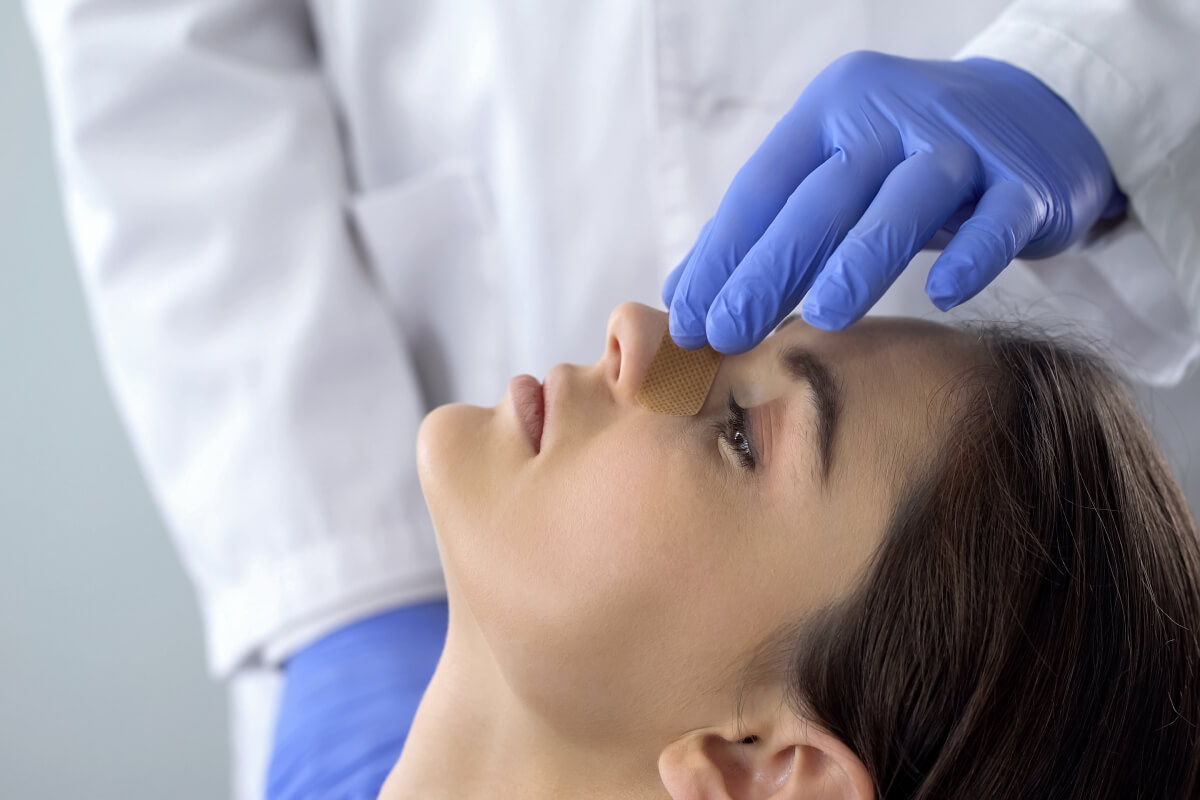
Thanks to extensive further training, our nasal surgeons are always at the cutting edge of research in the field of nose correction (rhinoplasty). You can therefore rely on up-to-the-minute advice, care and treatment throughout the entire process. Depending on the findings, we offer you the optimal treatment method for your concern.
Treatment 1Nose narrowing
Whether congenital or the result of an accident – the so-called “wide nose” is a classic case for rhinoplasty: many people find this nose shape not only unattractive, but the distorted nostrils can also make breathing difficult. A congenital “wide nose” often develops due to an oversized area of cartilage or bone, which is why during the nose operation these layers are carefully removed with due regard for the mucous membranes. For a purely visual narrowing of the nostrils, removing a small piece of tissue is even sufficient.
With hyaluronic acid injections, the purely aesthetic adjustment of the nose's width works even more simply. Hyaluronic acid can lift the tip of the nose and thereby make the nose appear less wide. The injection is minimally invasive and shows an aesthetically pleasing result within just a few minutes.
Treatment 2Nose reduction
Sometimes noses simply appear too large overall and refuse to blend harmoniously into the face. Modern nasal surgery can act here in several ways to restore the aesthetic balance. If the nose only appears so large due to its “fleshiness”, its shape can be gently adjusted with hyaluronic acid injections. Alternatively, crystalline cortisone can be injected at specific points to reduce flesh and tissue layers without a nose operation.
In surgical nose operations, excess cartilage or bone material is removed either via an incision on the columella (open rhinoplasty) or directly inside the nostrils (closed rhinoplasty). Which method is used depends above all on the reason why the nose appears unpleasantly large in comparison to the rest of the face.
Treatment 3Nasal tip correction
An aesthetically unappealing nasal tip can make you feel uncomfortable with the nose as a whole. An asymmetrical nasal tip, for example, can cause the entire face to be perceived as crooked. Fortunately, due to the small treatment area, a nasal tip correction does not always require a full-scale nose operation.
In most cases, the shape of the nasal tip can be adjusted quite simply by injecting crystalline cortisone, hyaluronic acid or autologous fat. Surgically, the cartilage can also be reshaped (reshaping) or supported with sutures (suture technique). In addition, we can tighten the nasal tip through a columella reduction or build it up and sculpt it with high-quality implants.
Treatment 4Revision rhinoplasty
Revision rhinoplasty (also called secondary rhinoplasty) is a form of nasal surgery in which the results of a previous nose operation are corrected. Occasionally, for example due to a disturbed healing process, suboptimal results can occur, and sometimes even breathing problems arise. Crystalline cortisone, autologous fat or hyaluronic acid can be used in such cases to free the nose of minor aesthetic flaws.
Where more extensive correction is needed, our nasal surgeons can remove or add material to the nose in the course of an operation, as well as carefully remove visible scars. These procedures require a great deal of experience and craftsmanship from the surgeon, as the original operation may already have caused a loss of nasal structure. Here you can rely on our UNIQAESTHETICS® specialists.
Treatment 5Nasal hump correction
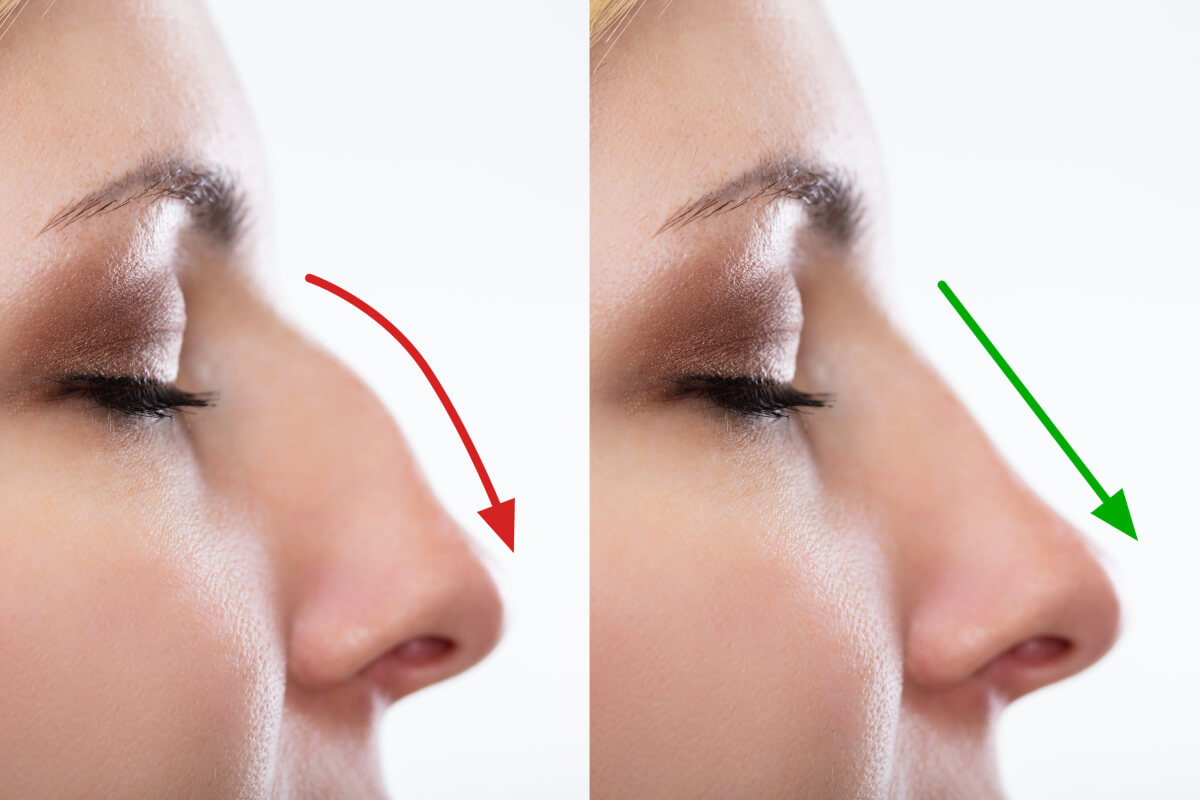
The “hooked nose”, “aquiline nose” or “hump nose” is a nose shape caused by excess cartilage or bone material on the bridge of the nose. Sometimes it also occurs as a side effect of a crooked or overly long nasal septum, which can lead to breathing problems and sinus infections. That is why the correction of this nose shape is one of the most frequent procedures in nasal surgery. The excess material is removed either through an incision or through the nostrils. For maximum precision, this can even be done with special piezoelectric instruments with diamond tips.
As a minimally invasive option, a hump nose can also be treated with hyaluronic acid. The natural substance is carefully injected above and below the hump to even out the overall shape of the nose and visually straighten the nasal bridge. Although this method needs to be repeated every two years on average, it requires the least effort and no full nose operation. And the results can be admired after just a few hours.
Treatment 6Nose contouring
Nose contouring is not a nose operation but a minimally invasive treatment, after which you can usually marvel at an aesthetically pleasing nose within just a few hours. Pure nose contouring is not effective for all findings – for example, when the aesthetic shape of the nose is caused by cartilage or bone mass. For a purely aesthetic change, however, it is an excellent choice beyond surgical nasal surgery.
Nose contouring works primarily with hyaluronic acid and crystalline cortisone. For example, a nose that appears flat or wide can be visually lifted by injecting hyaluronic acid. Crystalline cortisone, in turn, is used to reduce tissue, for example to make the nose appear flatter or generally less large. With a combination of both treatments, the outer shape of the nose can be adjusted in practically every dimension. In this way, the overall aesthetics of the face are optimised without surgical procedures.
Do you still have questions about our nasal surgery? Would you first like a non-binding consultation? Get in touch with us or arrange an appointment directly. We look forward to welcoming you and showing you our inviting premises.